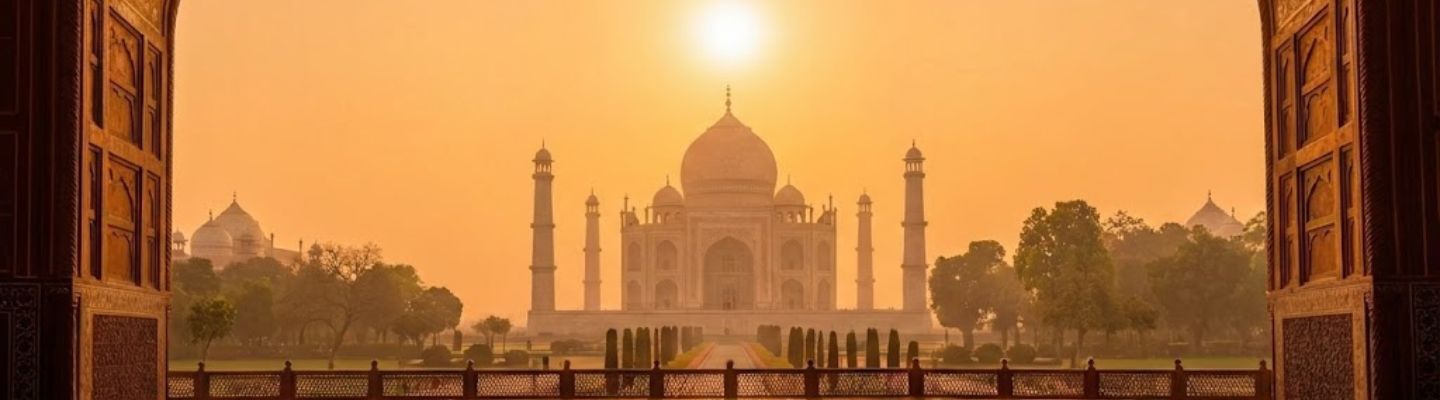
The Taj Mahal, located in Agra, Uttar Pradesh, is one of India's most iconic landmarks and a UNESCO World Heritage Site. Built by Emperor Shah Jahan in memory of his beloved wife Mumtaz Mahal, this majestic white marble mausoleum stands as a symbol of eternal love and Mughal architectural brilliance. Attracting millions of visitors from around the world every year, the Taj Mahal is a must-visit destination for travelers seeking history, culture, and breathtaking beauty.
Exploring the Taj Mahal Main Complex
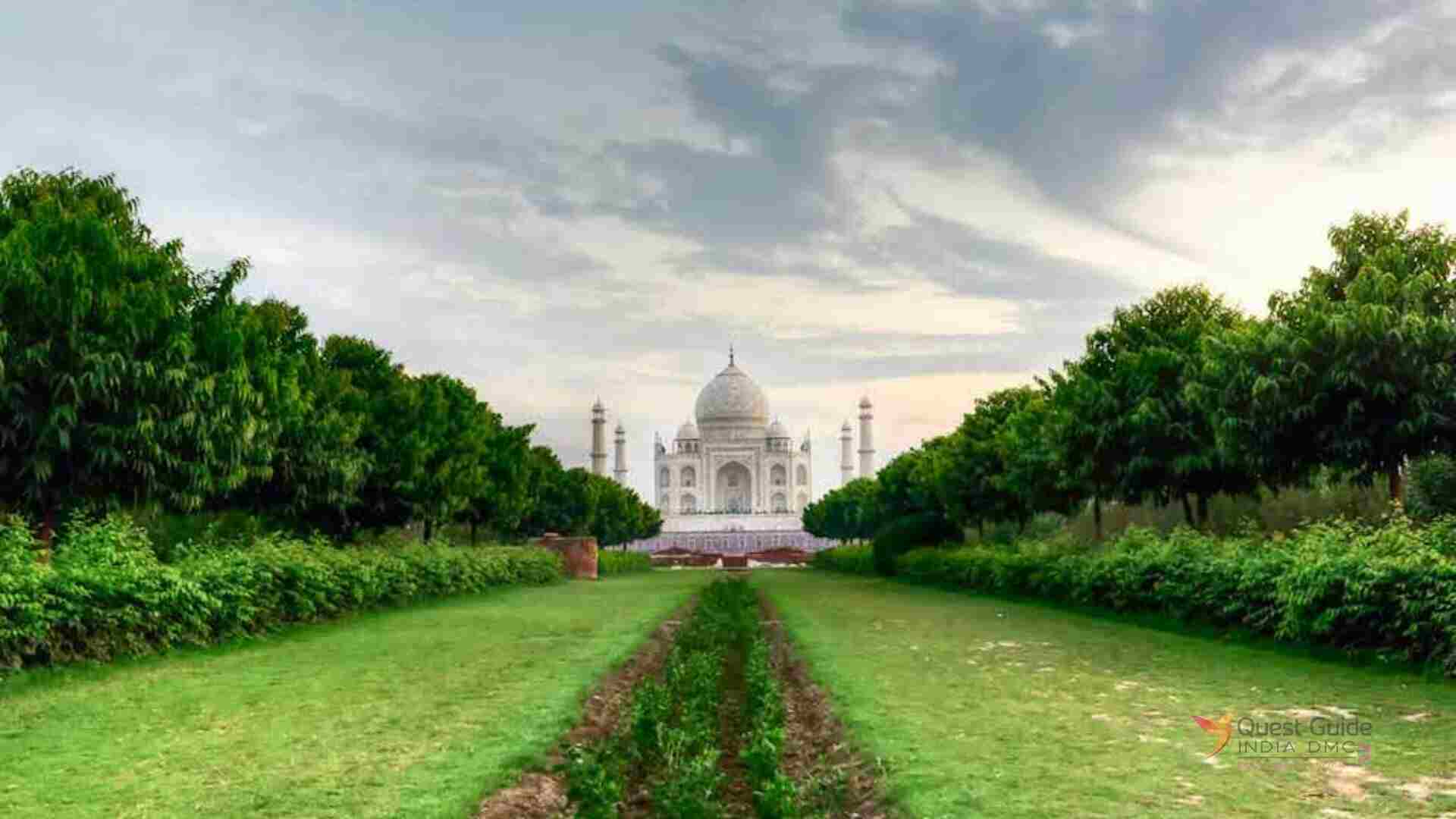
The Taj Mahal's main mausoleum is built entirely of white Makrana marble and features a central dome rising 73 meters high, surrounded by four slender minarets. Intricate floral carvings, inlaid semi-precious stones, and calligraphy adorn its walls, making it one of the finest examples of Mughal architecture in the world. Visitors can explore the beautifully landscaped Charbagh gardens, reflecting pools, and the tombs of Shah Jahan and Mumtaz Mahal.
Agra Fort: A Mughal Stronghold
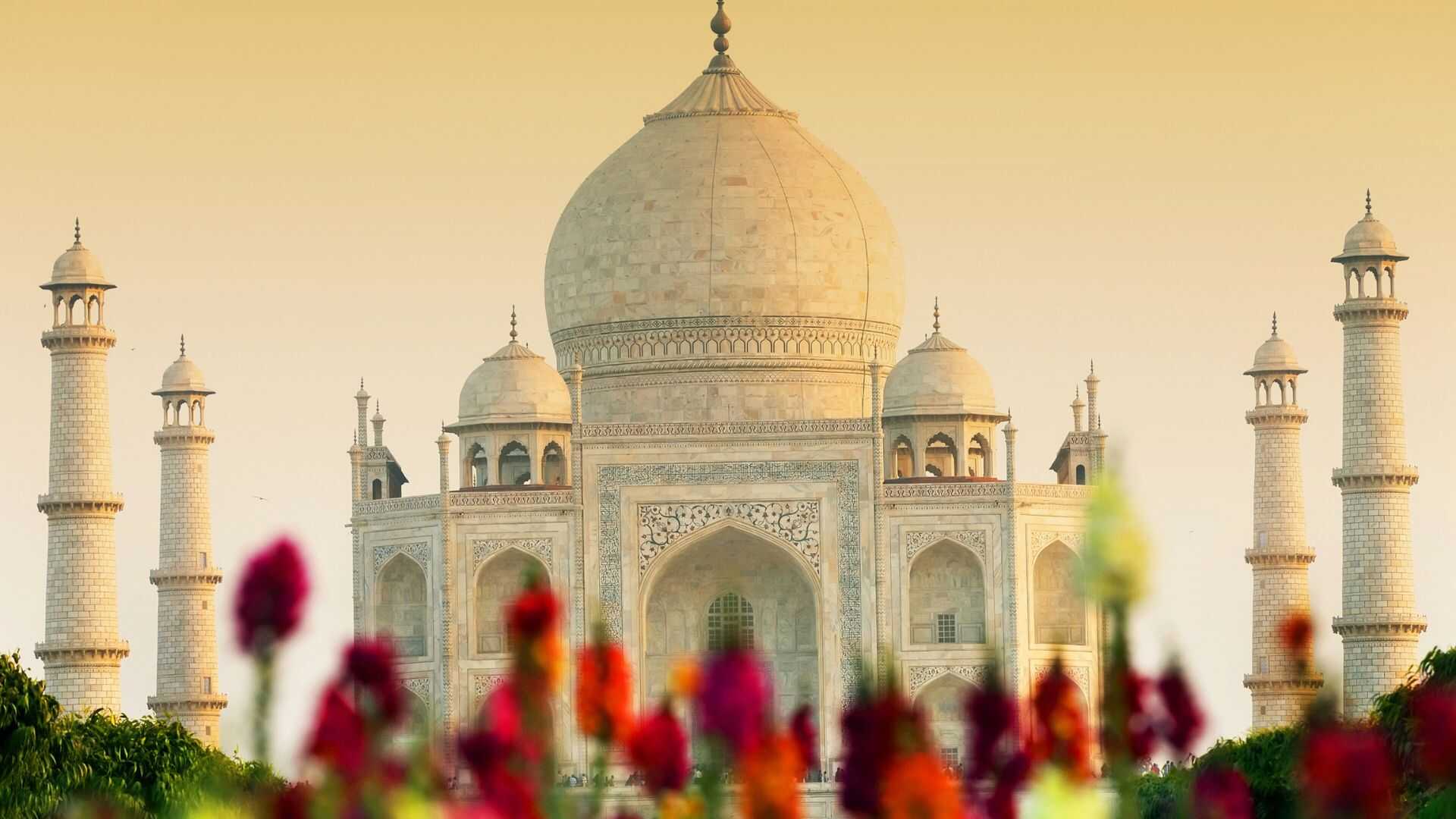
Just 2.5 km from the Taj Mahal, the Agra Fort is a red sandstone fortress that once served as the main residence of the Mughal emperors. Visitors can marvel at the imposing Jahangir Palace, the ornate Khas Mahal, and the Diwan-i-Am (Hall of Public Audience). From Musamman Burj, you can also enjoy panoramic views of the Taj Mahal across the Yamuna River.
Mehtab Bagh: Sunset Views of the Taj Mahal
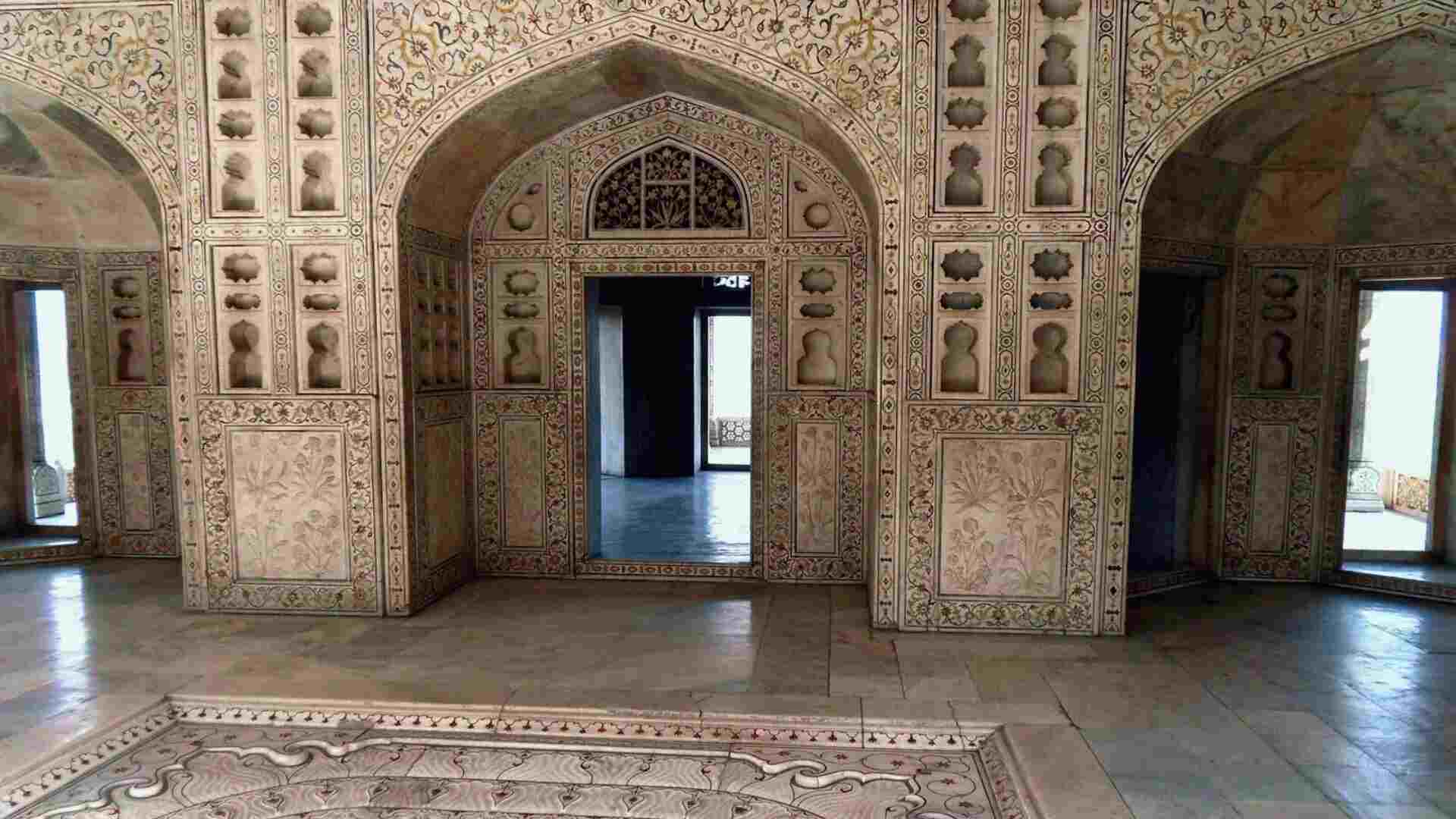
Across the Yamuna River lies , a serene garden offering spectacular sunset and moonlight views of the Taj Mahal. Ideal for photography and quiet reflection, it provides a different perspective of the monument and is a must-visit for those looking to capture its beauty beyond the main entrance.
Itmad-ud-Daulah: The Baby Taj
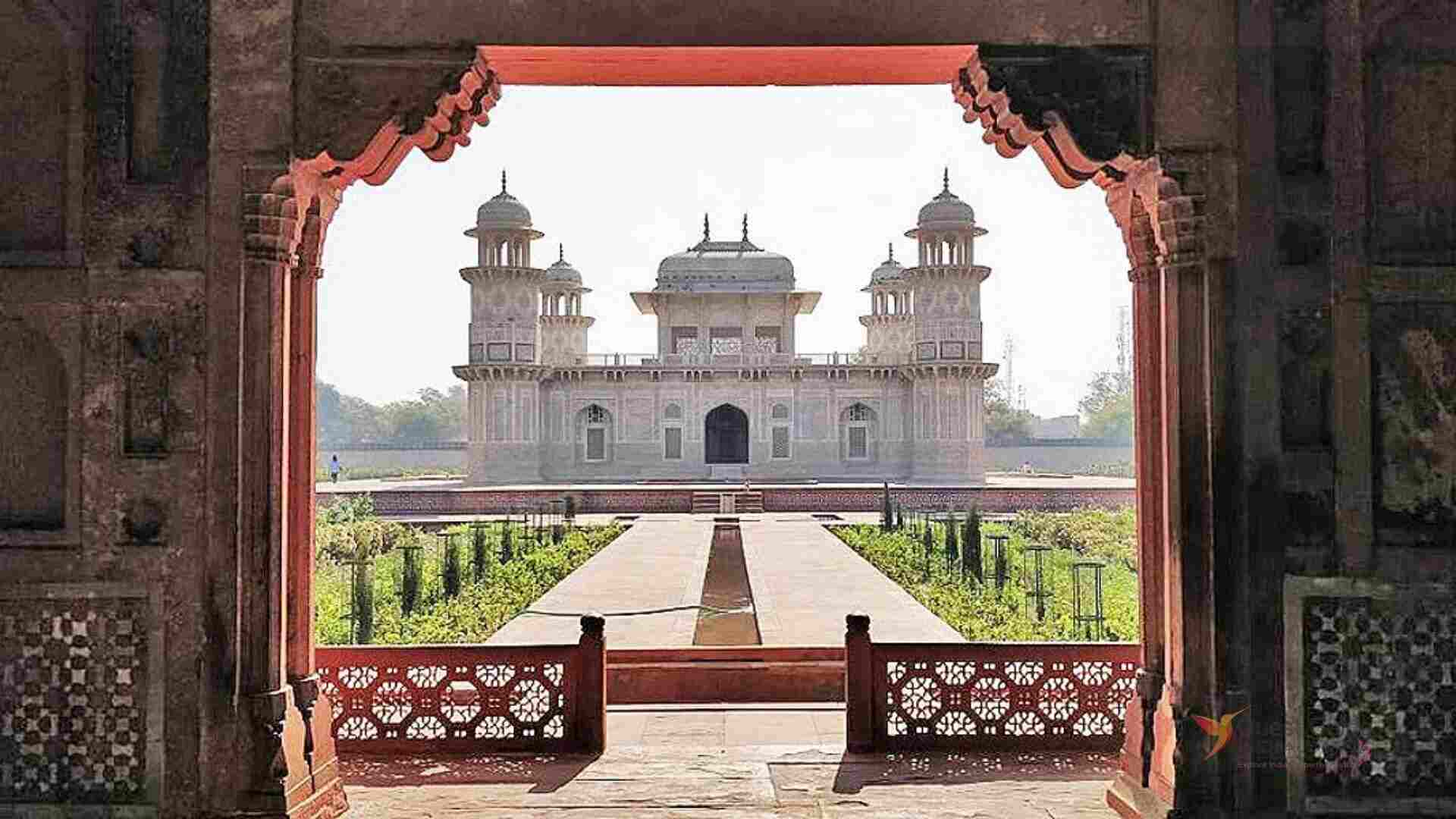
Known as the "Baby Taj," Itmad-ud-Daulah is a smaller yet exquisitely decorated mausoleum featuring intricate marble inlay work. It served as a design inspiration for the Taj Mahal and is perfect for travelers seeking a quieter, detailed experience of Mughal architecture.
Things to Do in Agra
Agra offers a variety of experiences beyond visiting the Taj Mahal. Enjoy guided tours to learn about Mughal history, shop for marble handicrafts and traditional jewelry in local markets, savor authentic Mughlai cuisine including petha and mawa jalebi, and explore the Yamuna riverbanks for serene evening walks.
Best Time to Visit the Taj Mahal
The ideal time to visit the Taj Mahal is between October and March, when the weather is pleasant and perfect for sightseeing and photography. Early morning visits are recommended for avoiding crowds and capturing the monument bathed in soft golden sunlight. Monsoon months can be rainy, while summer months can get very hot.
How to Reach the Taj Mahal
-
By Air: Agra's Kheria Airport has domestic flights. Delhi's Indira Gandhi International Airport (200 km away) is the nearest major international airport.
-
By Train: Agra Cantt Railway Station is well-connected to major cities like Delhi, Mumbai, Jaipur, and Kolkata.
-
By Road: Agra is connected via the Yamuna Expressway from Delhi (approx 3-4 hours drive) and through National Highways.
Essential Travel Tips
-
Book tickets online in advance to avoid long queues at the ticket counter
-
Visit early morning (sunrise) for the best photos and fewer crowds
-
The Taj Mahal is closed on Fridays for prayers
-
Carry a valid photo ID for entry (passport for foreigners)
-
Dress modestly and wear comfortable shoes for walking
-
Carry water and sun protection during summer months